罗杰·瓦迪姆执导的《上帝创造女人》是一部文化影响力远超其剧情本身的影片。该片于1956年以法语片名《Et Dieu... créa la femme》上映,由瓦迪姆执导,瓦迪姆与拉乌尔·J·莱维共同编剧,碧姬·芭铎、库尔德·于尔根斯和让-路易·特兰蒂尼昂主演。英国电影协会(BFI)将其列为1956年由瓦迪姆执导、上述三位主演主演的法国电影。
从故事层面来看,这部电影是一部发生在圣特罗佩的浪漫爱情片。芭铎饰演朱丽叶,一位年轻的孤儿,她自由奔放的行为扰乱了周围的小镇。Criterion 将剧情概括为:十八岁的孤儿朱丽叶放荡不羁,扰乱了圣特罗佩的平静,而她天真的丈夫米歇尔则努力理解并试图约束她。但这部电影的持久意义并非源于其叙事的复杂性,而是源于它将芭铎推向了国际银幕巨星的地位,并改变了战后观众对欧洲电影的期待。
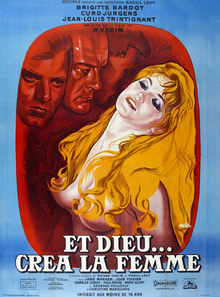
要理解《上帝创造女人》,首先要明白的是,它并非像《白日美人》那样细腻的心理剧,也并非像《感官世界》那样严肃深奥。它更轻松、更阳光、更奔放,也更明显地围绕着明星形象而打造。但这并不意味着它不重要。事实上,它的简洁正是其历史意义的一部分。瓦迪姆围绕着芭铎的形象构建了这部电影,而芭铎的形象本身也成为了一次文化事件。
Criterion 将这部电影的成功描述为“彻底改变了外国电影市场”,并将碧姬·芭铎捧成了国际巨星。这种说法很贴切,因为《上帝创造女人》不仅仅是一部法国热门影片,也不仅仅是芭铎的个人秀。它改变了外语电影的传播方式,使其不再局限于艺术影院的观众群体。对于20世纪50年代末的观众来说,这部电影代表了一种新鲜、随意、现代的风格,挑战了当时传统的银幕行为准则。
朱丽叶并非传统意义上受人尊敬的女主角。她难以被纳入周围的道德范畴。村民们视她为异类,男人们将幻想投射在她身上,女人们常常评判她,而各种机构则试图约束她。但这部电影本身远比对自由的简单颂扬复杂得多。朱丽叶看似自由奔放、难以驾驭,却也时刻处于他人的注视、讨论、交换、解读和控制之下。这种张力赋予了影片最引人入胜的层次:它既展现了自由的形象,又揭示了这种形象是如何迅速被社会的目光所掌控的。
圣特罗佩对影片的氛围至关重要。这里的场景并非只是装饰性的。港口、船只、沙滩、室内装潢和阳光普照的街道,共同营造出一个看似开放轻松的世界,但在这平静的表面之下却隐藏着焦虑。这座小镇如同一个社会有机体,人人都在观察着其他人。欲望即便看似私密,实则公开。名誉成为了一种监视手段。从这个意义上讲,影片远没有表面看起来那么轻松自在。它看似光明的外表下,隐藏着一套严苛的道德准则。
芭铎的表演之所以成功,是因为她没有以传统戏剧化的方式将朱丽叶演绎成一个精于算计的角色。她显得冲动、躁动不安、充满活力,并且对周围人彬彬有礼的举止感到不自在。这对于她在银幕上的影响力至关重要。早期的明星固然也展现过魅力和性感,但芭铎的形象却显得更加自然,更直接。TCM认为,20世纪五六十年代社会规范的改变,为电影的呈现和暗示方式带来了转折点,而芭铎正是这一流行文化电影转变的核心人物。
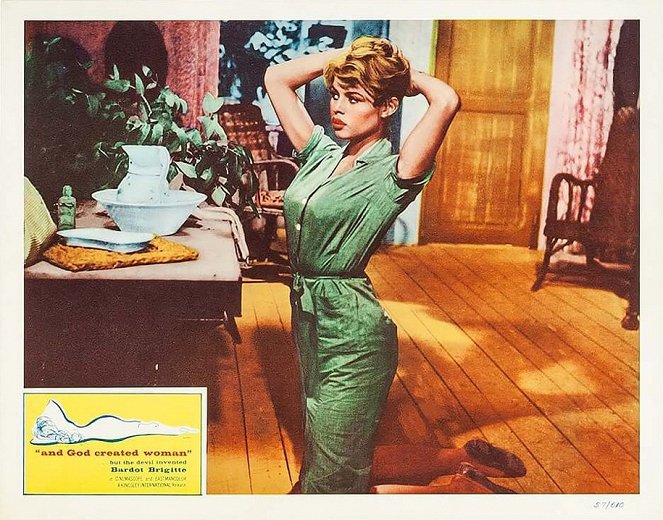
这部电影的片名一直以来都带有双重含义。一方面,它听起来充满神话色彩,又略带戏谑,仿佛朱丽叶不仅仅是一个女人,而是一个全新的电影形象。另一方面,片名也揭示了影片自身的问题:朱丽叶是由一位男性导演“创造”的,被男性的欲望所塑造,并由男性角色进行讨论。这使得这部电影既重要又充满争议。它帮助国际观众认识了一个更加解放的女性形象,然而,这个形象本身却是由一个经常将女性物化为男性想象符号的体系所塑造的。
This is why a modern discussion of And God Created Woman should avoid two extremes. It should not dismiss the film only because its gender politics can feel dated. But it should also not praise it uncritically as pure emancipation. The film is historically significant precisely because it sits at a contradiction: Juliette appears free, but the cinema around her often turns that freedom into spectacle.
The men around Juliette represent different forms of possession. Michel, played by Jean-Louis Trintignant, is sincere but immature. He wants to love Juliette, but his love is mixed with the wish to stabilize her. Antoine represents a more openly selfish and opportunistic energy. Carradine, played by Curd Jürgens, brings wealth, age, and worldly calculation. These men differ in personality, but all of them try to define Juliette according to their own needs. She becomes a screen onto which they project marriage, conquest, rescue, status, and fantasy.
This is where the film becomes more interesting than its reputation suggests. Juliette may look like the center of the story, but structurally she is often surrounded by systems of control. The family, the town, the church, the economy, the male gaze, and the logic of respectability all attempt to place her. Her body and behavior become public questions. In that sense, And God Created Woman is not only about desire. It is about social panic in the face of a woman who refuses to behave predictably.
Vadim’s direction is not especially deep in a literary sense, but it is very clear in visual terms. He understands the power of color, weather, movement, and framing. The film’s CinemaScope compositions give Saint-Tropez a relaxed expansiveness, while Bardot’s movements often disturb that visual order. She does not always seem to belong to the spaces that contain her. She crosses rooms, beaches, and streets with a physical looseness that contrasts with the rigid expectations of the people watching her.
That visual looseness is central to the film’s modernity. The camera often seems less interested in plot mechanics than in presence: how a character sits, walks, dances, turns away, or refuses to perform politeness. This is one reason critics connected Vadim, however unevenly, to the coming energy of the French New Wave. Criterion’s essay notes that Jean-Luc Godard, still writing as a critic, saw something modern in Vadim’s cinema. Whether or not one agrees with that praise, it shows how the film was received as part of a broader shift away from traditional French studio formality.
The famous dance sequence near the end is often discussed because it concentrates the film’s entire argument into movement. Juliette’s dance is not simply entertainment inside the story. It becomes a public act of refusal. She dances while others watch, judge, desire, fear, or lose control. The sequence turns the social gaze into spectacle. Everyone looks at Juliette, but their looking reveals them as much as it reveals her.
From a film-analysis perspective, that scene is useful because it shows how cinema can turn a body into a site of social conflict. Juliette’s movement appears spontaneous, but the camera, editing, music, and surrounding reactions organize it into meaning. The dance is not merely about personal expression. It is about the collision between personal expression and public interpretation. This is why the film still works as a forum discussion topic: it raises questions about freedom, performance, spectatorship, and control.
The film’s politics are therefore unstable. On one hand, Juliette’s refusal to be modest, obedient, or easily ashamed gave the film a rebellious charge in the 1950s. Britannica notes that Bardot’s films with Vadim broke contemporary film taboos and set box-office records in Europe and the United States. On the other hand, the film often imagines freedom through a male-controlled visual language. Juliette may resist social discipline, but she is still framed as an object of fascination.
This does not cancel the film’s historical importance. Instead, it makes the film more useful to discuss. And God Created Woman is not a clean feminist manifesto, nor is it merely an empty exploitation object. It is a cultural artifact from a moment when cinema was renegotiating the relationship between desire, censorship, youth, and commerce. It opened doors, but it also carried the limitations of the system that produced it.
Bardot’s stardom is inseparable from this contradiction. She became a symbol of modern freedom, naturalness, and defiance, but symbols are never fully owned by the people they represent. Bardot’s screen image was consumed internationally as a sign of French modernity, Mediterranean looseness, and postwar sensual release. Yet the very intensity of that consumption also reduced her to a myth. The person and the image became difficult to separate.
Compared with The Dreamers, And God Created Woman is less intellectual and less self-reflexive, but both films are fascinated by youth as performance. Compared with Belle de Jour, Vadim’s film is less ambiguous and more direct, but both works examine the tension between respectable society and private desire. Compared with Last Tango in Paris, it is less psychologically wounded, but both films show how adult relationships can become spaces where freedom and domination are hard to separate.
The film is also worth examining as a study of place. Saint-Tropez later became associated with glamour, leisure, and celebrity culture, but in And God Created Woman it is still presented as a community in transition. The presence of Carradine’s business interests adds an economic dimension. Land, harbor development, family property, and romantic rivalry are linked. Desire is not separate from money. The body, the town, and the coastline all become things people want to possess, develop, or control.
That economic layer is easy to overlook because Bardot dominates the film’s memory. But Vadim’s story places Juliette inside a network of ownership. Carradine wants land and influence. The Tardieu family wants stability. Michel wants marriage. Antoine wants pleasure without responsibility. The town wants moral order. Juliette wants movement, intensity, and self-definition, but every route she takes leads into someone else’s expectations.
This makes the ending especially revealing. Without treating it as a simple spoiler puzzle, the final movement does not really liberate Juliette. It reinscribes her into a relationship and into a social order that has been shaken but not transformed. For some viewers, this makes the film conservative beneath its surface provocation. For others, the unresolved tension is exactly what makes it interesting. The film unleashes a modern image but does not know what to do with her.
A responsible recommendation should therefore present And God Created Woman as historically important rather than morally simple. It is not a film to praise only for glamour, and it is not a film to reject only because its gender assumptions are dated. It should be watched as a star-making machine, a social document, a Mediterranean melodrama, and a revealing example of how cinema manufactures modern myths.
The film’s weaknesses are real. The plot can feel thin. Some character motivations are schematic. The male characters are often more functional than psychologically layered. The emotional logic sometimes gives way to visual display. But these weaknesses are also connected to the film’s design. It is less a tightly constructed drama than a vehicle for an image. The real subject is not what happens next, but what happens when a camera, a performer, a landscape, and a changing culture meet at the right historical moment.
For modern viewers, the best way to watch the film is with double vision. On one level, enjoy the color, the Riviera atmosphere, the music, the movement, and Bardot’s magnetic screen presence. On another level, ask what the film is doing with that presence. Who is looking? Who has power? Who speaks about Juliette, and who listens to her? Does the film understand her, or does it only display her? These questions make the film more rewarding than a simple nostalgic viewing.
这部电影尤其适合对新浪潮之前的法国电影、明星塑造、战后欧洲文化变迁、审查制度历史、性别表现以及主流艺术电影中成人主题的演变感兴趣的观众。它或许会让期待布努埃尔式形式复杂性或大岛渚式哲学严谨性的观众感到失望。但作为一部文化转折点之作,它仍然至关重要。
在论坛讨论中,一个有用的角度是将《上帝创造女人》描述为一部关于银幕神话诞生的电影。朱丽叶是一个角色,但碧姬·芭铎才是事件本身。瓦迪姆的这部电影创造了一个空间,让芭铎的形象得以以一种全新的方式呈现:随意、阳光、桀骜不驯,难以被旧有的道德体系所接受。这种形象的影响远远超出了电影本身。
归根结底,《上帝创造女人》之所以重要,是因为它捕捉到了电影开始更加直接地展现青春、欲望和身体存在的时代,同时又仍然受制于旧有的性别和控制结构。它的美是真实的,它的影响是真实的,它的问题也是真实的。正是这种组合,使它比一部简单的经典之作更引人入胜,也比一部简单的丑闻电影更复杂。
这是一部充满阳光与监视、自由与构图、现代性与神话构建的电影。它或许并非瓦迪姆最深刻的作品,但却是彻底改变了他在电影史上地位的一部。更重要的是,它为世界影坛带来了一次标志性的明星亮相:碧姬·芭铎饰演的朱丽叶,在圣特罗佩的街头漫步,仿佛一个周围社会无法解答的问题。